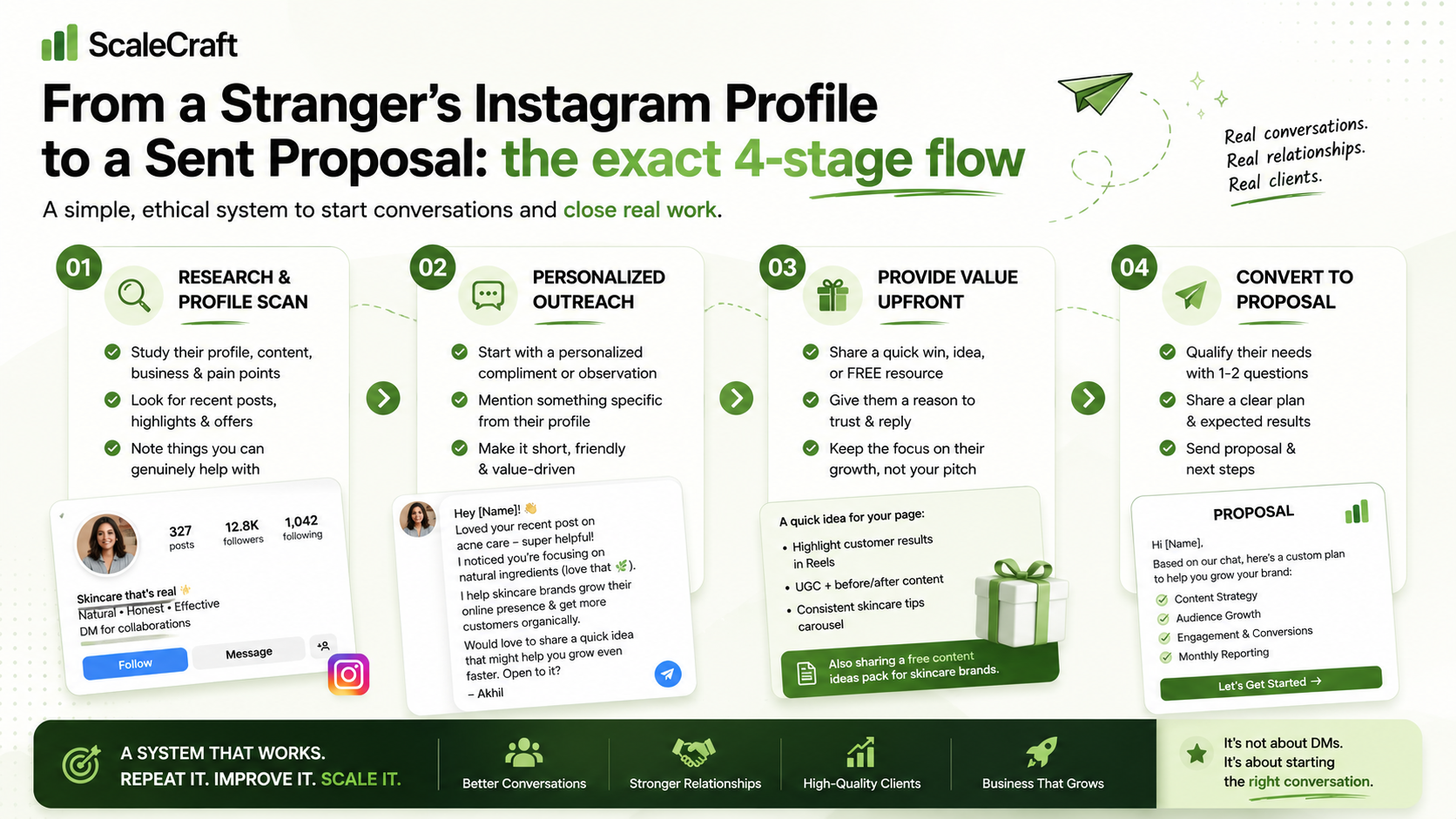
How to Land Your First High-Ticket Client in 2026 (Using AI + Personalization)
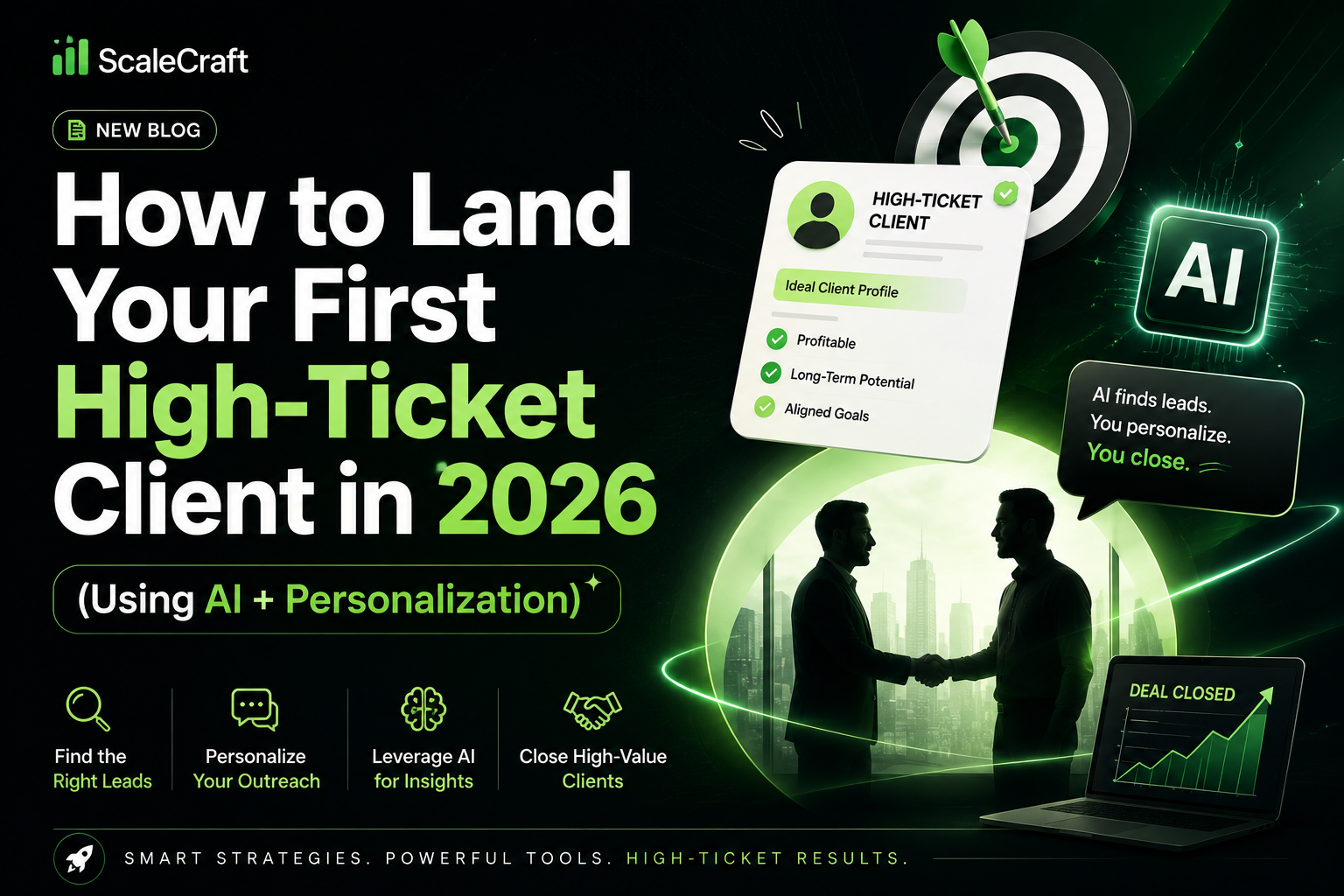
How to Land Your First High-Ticket Client in 2026
Landing high-ticket clients is the dream of every freelancer.
More money per project. Better clients. Less time chasing low-paying work.
But there’s a problem:
- You don’t have a massive portfolio.
- You don’t have years of experience.
- You don’t have a big audience or referrals yet.
So how do you actually land a premium client in 2026 without all of that?
The answer: Personalization + AI.
In this guide, you’ll learn a simple, repeatable system to:
- Find the right leads (who already have the problem you solve)
- Use AI to research them in minutes
- Send personalized outreach that gets replies
- Turn those replies into a high-ticket proposal that feels like a no-brainer
---
Why High-Ticket Clients Say Yes (Even to Newer Freelancers)
High-ticket clients don’t pay more because you’ve been freelancing for 10 years.
They pay more because they believe:
- You understand their specific problem.
- You have a clear plan to solve it.
- The outcome is worth far more than your price.
Most freelancers fail at step 1. They send generic messages about their skills:
“I’m a copywriter/designer/marketer and I help businesses grow. Do you need help?”
Clients ignore this because it’s about you, not them.
Your advantage in 2025 is that you can use AI to quickly understand a prospect’s world and then write outreach that feels like you wrote it just for them.
---
The Secret: Personalization + AI
Personalization used to mean spending 30–60 minutes researching each prospect.
Now, with AI, you can:
- Pull up a company’s site, content, and offers
- Summarize their positioning, audience, and funnel
- Spot gaps and opportunities
- Turn that into a tailored message
All in 5–10 minutes per lead.
The formula is simple:
Right lead × Real problem × Personalized message × Clear next step
Let’s break it down.
---
Step 1: Find the Right Leads
Stop cold emailing everyone.
The fastest way to land a high-ticket client is to talk only to people who:
- Already value what you do (they’re spending money on it or clearly need it)
- Have a visible problem you can fix
- Have money (they sell high-ticket offers, have a team, or are actively advertising)
What “Right Leads” Look Like
Depending on your skill, here are examples:
- Copywriter: Coaches, course creators, or agencies with traffic but weak landing pages or emails.
- Designer: SaaS tools or agencies with cluttered, outdated, or inconsistent branding.
- Paid ads specialist: Businesses already running ads but with poor creative, weak offers, or no clear funnel.
- Email marketer: E-commerce brands with good traffic but almost no email flows or campaigns.
How to Use AI to Identify Good Leads
You can use AI as your research assistant. For each potential lead, feed AI:
- Their website URL
- Their main offer or product
- Any visible content (blog, YouTube, socials, etc.)
Then ask AI questions like:
- “Summarize this business in 3–4 sentences. Who do they serve and what do they sell?”
- “What are 3–5 obvious problems or missed opportunities in their marketing/sales funnel?”
- “If I’m a [your skill], what are 3 specific ways I could help them increase revenue or leads?”
You’re looking for evidence of pain, such as:
- Confusing messaging
- Weak or generic offers
- No clear call-to-action
- No email capture
- No follow-up sequences
- Inconsistent branding
- Traffic but low engagement
If AI can clearly list problems you know how to solve, that’s a good lead.
---
Step 2: The Script (AI-Assisted, You-Approved)
Once you’ve found a good lead, you’ll use AI to help draft a personalized outreach message.
The key: Focus on their problems, not your skills.
The Outreach Structure
Use this simple 6-part structure:
- Personal opener (prove it’s not a mass email)
- Observation about their current situation
- Specific problem or missed opportunity
Automate Client Acquisition with ScaleCraft Systems
Get pre-built Notion CRM workspaces, Gemini AI agent prompts, and cold outreach scripts.